

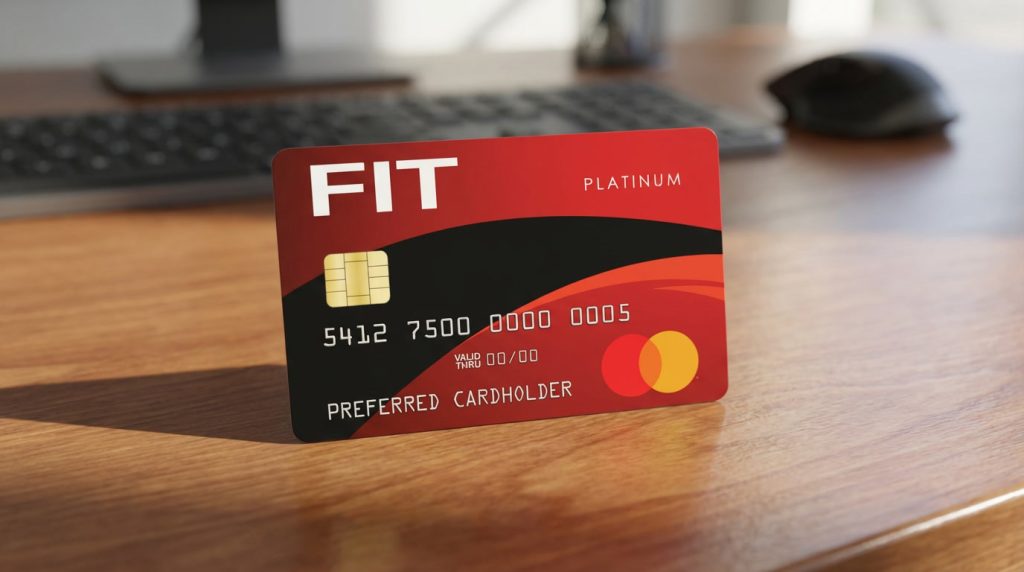
Post-2025, lenders across the U.S. tightened underwriting. Many consumers with past delinquencies, collections, or bankruptcies found themselves locked out again.
The FIT Mastercard exists for this exact situation: re-entry credit.
It’s not forgiving — but it is available.
Approval Requirements: What Actually Matters
There’s no published minimum score, but approvals typically factor in:
- Recent late payments or collections
- Discharged bankruptcies
- Current income consistency
- Debt-to-income ratio
- Number of recent hard inquiries
📌 Insider tip: Applicants who wait 60–90 days after a denial elsewhere often see better results.
How to Apply (Step-by-Step)
- Go to the official application page.
- Enter your personal and financial details.
- Review fees and card terms carefully.
- Submit your application.
- Receive a decision (often quickly).
- Card ships by mail if approved.
⚠️ A hard credit inquiry is part of the process.
Fees, APR & Cost Awareness
Expect:
- An annual fee
- Possible monthly maintenance fee
- High purchase APR
- Penalty fees for late or returned payments
This card should never carry a balance.
How to Use the FIT Mastercard to Rebuild Credit Faster
Most cardholders fail because they misuse it.
Follow this proven strategy:
- Keep utilization below 20–30%
- Use the card for one small recurring bill
- Pay in full every month
- Enable autopay immediately
- Avoid cash advances completely
💡 Uncommon but effective: One purchase every 30–45 days is enough to keep positive reporting active.
Who the FIT Mastercard Is Not Designed For
Despite its accessibility, this card isn’t a universal solution.
You should avoid the FIT Mastercard if you:
- Tend to carry balances month to month
- Miss due dates or manage payments manually
- Already qualify for a no-fee unsecured card
- Need a high credit limit for spending
This product rewards discipline, not flexibility. Used incorrectly, fees can outweigh any credit benefit.
How the FIT Mastercard Impacts Your Credit Score Over Time
The card’s influence is gradual but predictable when used correctly:
- Month 1–3: Establishes active revolving credit
- Month 3–6: On-time payments begin stabilizing your score
- Month 6–12: Score improvements may unlock better options
The biggest gains come from payment history + low utilization, not from frequent spending or limit increases.
👉 Think consistency, not activity.
The Smart Exit Strategy Most Rebuilders Forget
Opening the card is only half the plan — exiting it correctly matters just as much.
A clean strategy looks like this:
- Qualify for a no-fee unsecured card
- Activate the new card first
- Pay the FIT balance to $0
- Close the account after the new line reports
Done properly, this preserves your credit gains while eliminating unnecessary fees.
Hidden Advantages Most Users Miss
- Builds payment history, the largest FICO factor
- Adds revolving credit to your mix
- Can unlock better cards in 6–12 months
- Often simpler than credit-builder loans
Used correctly, the FIT Mastercard is a temporary rehabilitation tool, not a permanent solution.
When to Cancel or Upgrade
Consider moving on when:
- Your score reaches the mid-600s
- You qualify for a no-fee unsecured card
- Fees outweigh the reporting benefit
Upgrading your credit is about progression, not loyalty.
Better Alternatives to Compare
Depending on your profile, consider:
- Secured cards (lower cost if you have cash)
- Credit-builder installment loans
- Retail cards with easier approvals
- Entry-level cards from major issuers once your score improves
FAQ (Updated for 2026)
Does it report to all three bureaus?
Yes — consistently.
Is there pre-qualification?
No. Applications trigger a hard pull.
Can it help after bankruptcy?
Often yes, especially post-discharge.
Are credit limit increases guaranteed?
No — but responsible use helps.
Is it a long-term card?
No. It’s a stepping stone.
Final Opinion: Is It Worth It in 2026?
The FIT Mastercard remains what it has always been:
a paid entry point back into the credit system.
If you use it strategically, keep balances low, and move on once your credit improves, it can still serve its purpose in 2026.
👉 Check if the FIT Mastercard fits your credit rebuilding plan today.
When you click, you will be redirected

 Why the Discover it® Cash Back Still Dominates in 2026 <p class='sec-title' style='line-height: normal; font-weight: normal;font-size: 16px !important; text-align: left;margin-top: 8px;margin-bottom: 0px !important;'>An in-depth look at eligibility, reward optimization strategies, real-world use cases, and the mistakes most cardholders make.</p>
  How to Qualify and Maximize Chase Freedom® in 2026 <p class='sec-title' style='line-height: normal; font-weight: normal;font-size: 16px !important; text-align: left;margin-top: 8px;margin-bottom: 0px !important;'>Step-by-Step Instructions on How to Apply</p>
  The Tomo Credit Card Is Worth It: Full Approval & Credit-Building Guide <p class='sec-title' style='line-height: normal; font-weight: normal;font-size: 16px !important; text-align: left;margin-top: 8px;margin-bottom: 0px !important;'>How Tomo works, who gets approved, and smart strategies to build credit faster.</p>